

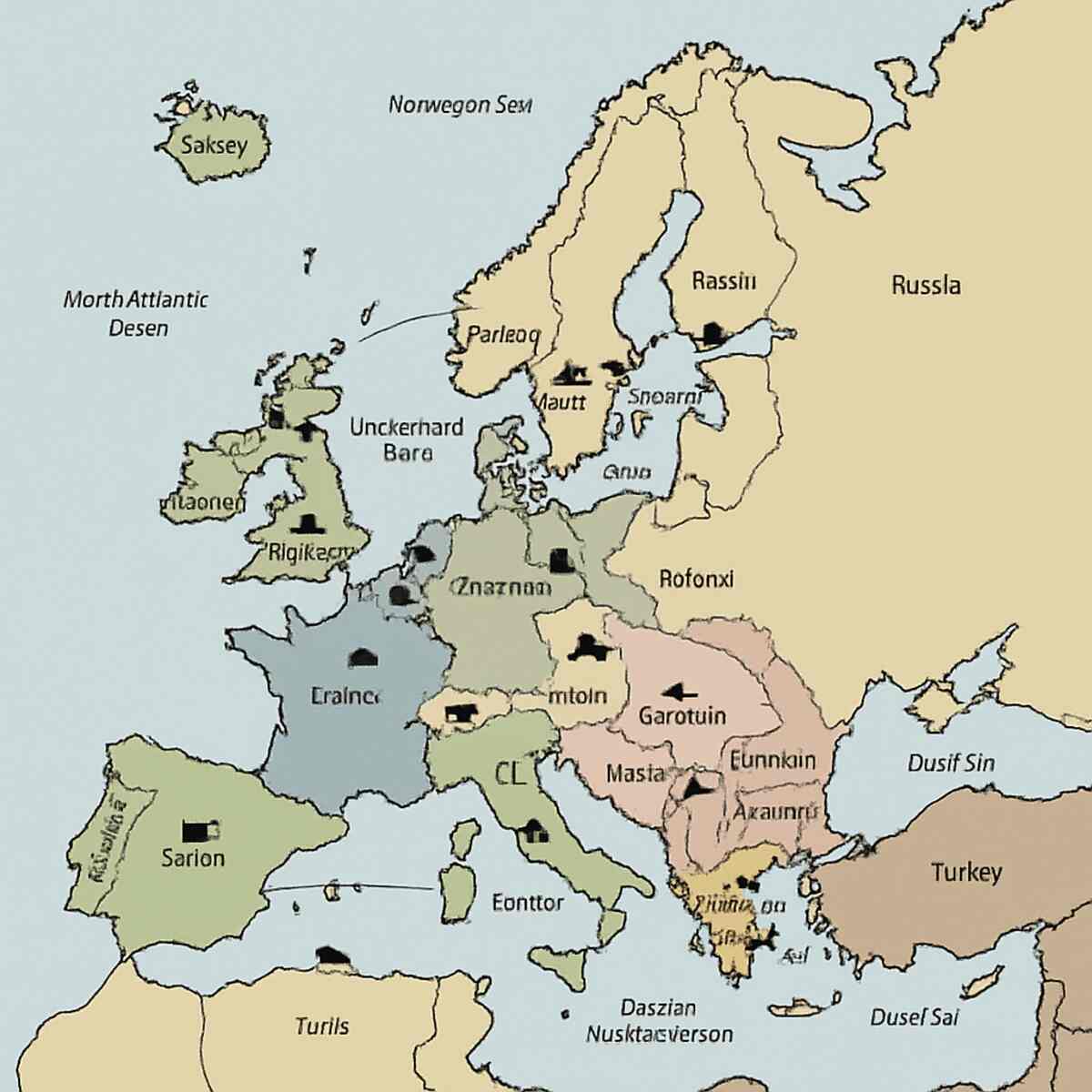

There’s an online game famous for destroying friendships. It has no dice, no random events, and a single turn can take an entire day. Your only weapon is your words, and your greatest skill is telling a believable lie—or spotting one. Sound intimidating? It doesn’t have to be. This guide will demystify one of the most rewarding strategy games ever created and get you playing with confidence. Check out paintprotections.com to know more
Unlike games of chance where a bad roll can ruin your night, success here depends entirely on your ability to negotiate. The game’s famous slow pace, with turns often lasting 24 hours, isn’t a bug; it’s the main feature. This extended time allows for deep conversations with other players where you can form secret alliances, coordinate attacks, or plead for your life. It’s a test of social cunning where every promise made—and broken—shapes the outcome.
This is your friendly entry point to the game, focusing on the human fundamentals that make it tick. Think you’re a good judge of character? You can put your instincts to the test against six other people who are just as convinced of their own shrewdness.
You’ll learn what makes this game unique, how a typical turn works, and where you can play your first match tonight. More importantly, you’ll have a simple, no-pressure plan for that first game. Before mastering anything, you have to start. Your journey into the world of the ultimate diplomacy game online begins now.
What Makes a Diplomacy Game Different From Risk or Monopoly?
Think about your typical board game. So much can hinge on a lucky dice roll in Monopoly or a fortunate card draw in Risk. An online diplomacy game throws that idea out the window completely. There is zero luck. Your success or failure is based entirely on your strategy and your ability to persuade, bluff, and read the intentions of the other players. Every victory is earned, and every defeat is a lesson learned.
Instead of waiting for your turn while others play, everyone decides their moves in secret at the same time. You might plan to attack Germany, but what if your ally, France, is secretly planning to attack you? You write down your “orders” for your armies and fleets, and once a deadline hits—often 24 hours later—everyone’s moves are revealed at once. It’s like a game of rock-paper-scissors played across an entire continent, where you must anticipate your rivals’ schemes.
This is where the “diplomacy” part comes alive. Since you can’t rely on luck and you don’t know for certain what others will do, your only real tool is communication. You’ll spend most of your time messaging other players, trying to coordinate attacks, forge alliances, or even spread misinformation to your enemies. Your words are your most powerful weapon, and knowing who to trust is the ultimate skill.
This blend of secret orders and open negotiation creates a unique experience that’s less about reacting to random events and more about psychological maneuvering. It’s not about fast clicks; it’s a slow-burning puzzle of human nature. This dynamic creates a simple but tense three-step rhythm that defines every single turn.
The 3-Step Rhythm of an Online Diplomacy Game
Unlike a traditional board game where turns take minutes, an online turn often lasts a full day. This creates an asynchronous pace you can fit into your life, checking in when you have a moment. Every turn, which represents six months of in-game time, follows the same tense cycle:
- The Negotiation Phase (Messaging): This is where the game truly happens. For a set period—often 24 hours—you’ll send private messages, hatch plans, and forge alliances. This is your time to use clever diplomacy press and messaging tactics to persuade a neighbor to join your attack or trick an enemy into a fatal mistake.
- The Order Phase (Secret Moves): Once you’ve made your deals, you secretly submit “orders” for each of your armies and fleets. Will you honor the promise you made to England? Or was that just a bluff? Your orders are locked in, hidden from everyone else.
- The Resolution Phase (The Reveal): This is the moment of truth. Once the deadline hits, the server processes all the hidden orders simultaneously. Everyone’s moves are revealed on the map at once. You instantly see who kept their word, who lied, and whose grand plan succeeded or spectacularly failed.
This constant cycle of scheming, committing, and revealing is the heart of this online turn-based political strategy game. The quiet period after you’ve submitted your orders, waiting to see if your new ally betrays you, is a uniquely thrilling experience. But all this maneuvering serves one simple goal.
How Do You Actually Win? The Simple Goal of Controlling Supply Centers
All the alliances, backstabbing, and dramatic reveals are in service of one thing: taking over specific, valuable territories on the map. Not every piece of land is equal. The game revolves around controlling key cities and ports known as “Supply Centers.”
Think of these Supply Centers as military factories. For each one you control, you can support one army or fleet on the board. If you start with three centers, you get three units. If you conquer two more from an enemy, you can build two new units to expand your empire. This creates a direct link between the territory you hold and the power you can wield.
The first player to control 18 of the 34 Supply Centers on the map wins the game instantly. That’s the magic number. Every negotiation, every broken promise, and every brilliant maneuver is ultimately about capturing and holding these vital locations. And since you can’t possibly take them all by yourself, your path to victory begins with a single, crucial conversation.
How to Negotiate Your First Alliance (Without Getting Instantly Betrayed)
That first message to a neighboring power can feel daunting. The key is to be direct. Forget elaborate schemes; your first goal is to signal your intentions. A message like, “Hey Russia, I’m playing as Turkey. I have no plans for the Black Sea and would prefer we work against Austria. Open to that?” is clear, concise, and gives the other player a straightforward question to answer. Vague messages create suspicion, but clarity invites cooperation.
A classic, effective opening is to propose a simple two-on-one team-up. Find a country caught between you and another power, and suggest a joint attack. As France, for instance, you might message England about teaming up against Germany. This approach is powerful because it offers a mutually beneficial plan that immediately tests if another player is willing to coordinate. It’s a fundamental piece of any diplomacy game strategy guide and a great way to start a partnership.
Here’s a secret many beginners miss: in a game known for betrayal, early reliability is a superpower. For the first few turns, do exactly what you say you will. If you promise to stay out of a territory, stay out. This builds a reputation for trustworthiness that makes you a valuable ally. Players prefer predictable partners, especially when chaos is erupting elsewhere on the board.
Clarity, a simple shared goal, and early follow-through are how to negotiate effective alliances. Mastering these press and messaging tactics gives you a huge advantage. Of course, your approach depends on the game’s communication style. This choice between open “Press” and silent “Gunboat” diplomacy changes everything.
Gunboat vs. Press: Choosing Your Communication Style
When you join a game, you’ll often see options for “Press” or “Gunboat.” Think of this as the single most important setting, as it defines the rules of communication. A Press game is the standard experience: you have a messaging system to negotiate, scheme, and build trust with other players. All those diplomacy press and messaging tactics we just discussed? They happen here. A Gunboat game, on the other hand, is played in complete silence. There is no messaging whatsoever; you can only communicate through your moves on the board.
The difference fundamentally changes what you’re trying to solve. Press games are a test of social intelligence—can you read people, forge reliable partnerships, and spot a lie? Gunboat, by contrast, is a colder, more mathematical puzzle. It’s all about predicting your opponents’ most logical moves without any verbal cues to guide you. While fascinating for experts, it strips away the personal drama and negotiation that makes the game a hotbed of stories and memorable betrayals.
For this reason, beginners should always choose a Press game. It’s the only way to learn the core skills of negotiation and experience the game in its full glory. Jumping into a Gunboat match first is like trying to understand a story by only looking at the pictures—you see what happens, but you miss all the meaning behind it. Fortunately, the best online diplomacy platforms make it easy to find a Press game.
Where to Play: A Quick Comparison of webDiplomacy vs. Backstabbr
Finding a game is easier than you think, and it’s completely free. Most of the action happens on two of the best online diplomacy platforms: webDiplomacy and Backstabbr. Think of the choice between them like picking a favorite social media site—they both connect you to people, but the look, feel, and layout are different. The right choice is a matter of personal preference.
Both sites are excellent for a diplomacy game online, but they cater to slightly different tastes. The comparison really comes down to the user experience you prefer for your first match.
Here’s a quick look at how they stack up for a beginner:
- Interface Style: Backstabbr has a sleek, modern, and minimalist design with a clean map that many find intuitive. In contrast, webDiplomacy has a more classic, forum-like appearance that feels dense with information but is very powerful once you know where to look.
- Mobile Friendliness: If you plan on checking moves and sending messages from your phone, Backstabbr’s responsive design is generally considered easier to use on a smaller screen.
- Game Finding: Both sites make it simple to find beginner-friendly games. webDiplomacy presents a large, filterable list of openings, while Backstabbr uses a more visual lobby system.
Ultimately, you can’t go wrong with either. My advice? Click on both, spend thirty seconds looking at the home page, and go with the one that immediately feels more comfortable to you. Once you’ve picked your arena and signed up, it’s time to join a game. But before you do, make sure you sidestep the most common beginner pitfalls.
Avoid These 3 Common Mistakes in Your First Game
Your first game can feel like stepping onto a stage without a script, but you can sidestep the most common mistakes new diplomacy players make just by knowing what they are. The biggest pitfall is silence. In a game that runs entirely on messages, being the quiet neighbor makes everyone else nervous. They don’t see you as peaceful; they see you as unpredictable and secretive. Sending a simple “Hello!” to the countries next to you immediately shows that you’re here to play the real game, not just push pieces around a map.
On the other end of the spectrum is being far too trusting. While making an ally is essential, blindly believing they will honor a deal for the whole game is a recipe for disaster. A core tip for how to play diplomacy for beginners is to trust, but verify. If your new ally says they are moving their armies east to fight someone else, check the turn results to make sure they actually did. Alliances last only as long as they are mutually beneficial, and it’s your job to notice when that changes.
Failing to coordinate your moves can also lead to a frustrating tactical error known as a “bounce” or standoff. Imagine two players both trying to move a unit into the same empty territory. In Diplomacy, this causes a traffic jam; neither unit succeeds, and they both stay where they were. This often happens between players who think they are working together but didn’t confirm their specific plans. A simple message prevents this clumsy mistake and shows you’re a player who thinks ahead.
The common thread through all this advice is that communication is the cure. It calms nerves, clarifies intentions, and prevents embarrassing blunders. But knowing you should talk is one thing; knowing what to say is another.
A Simple First-Turn Mindset for Any Country
Instead of worrying about the “perfect” first move, approach your opening turn with a simple intelligence-gathering mission. This mindset is a core lesson in how to play diplomacy for beginners. Your goal isn’t to conquer territory right away; it’s to understand the landscape. Look at your immediate neighbors on the map. Send each one a brief, friendly message. Ask them about their general plans and propose a simple, non-threatening arrangement for the first year, like agreeing to stay out of a specific territory. This four-step process—look, greet, ask, propose—is far more valuable than any single move.
You may see veteran players discussing complex strategies with names like the “Juggernaut” or referencing a specific guide like an Italy Lepanto opening tutorial. You can and should ignore all of that for now. Think of it like chess: while grandmasters study famous openings, a new player just needs to understand how the pieces move. In this game, relationships are your most powerful pieces. Focusing on establishing simple, clear communication is the only opening strategy you need. It tells you who is willing to talk and who is dangerously silent.
This approach transforms an intimidating start into a manageable one. For example, if you’re wondering how to win as Austria-Hungary—a notoriously difficult country—your first turn isn’t about some secret tactical move. It’s about sending messages to Russia, Italy, and Germany to see who is most receptive to an early friendship. You’ll learn more from their replies (or lack thereof) than from any pre-written guide. The game’s slow pace gives you time for this deep psychological puzzle, but what if you want the intrigue without the day-long turns?
Games Like Diplomacy, But Faster
That slow, 24-hour turn cycle is a core part of the classic experience, but it’s certainly not for everyone. If you’re intrigued by the concept but hesitant about the time commitment, you’re in luck. The community has developed games like Diplomacy but faster by simply shortening the clock. These “Speed” or “Blitz” matches condense negotiation deadlines from a day down to just 5-15 minutes. The game becomes a rapid-fire test of quick thinking and gut instinct, delivering the entire dramatic arc of trust and betrayal in a single evening.
Beyond just speeding up the original, other games capture a similar spirit in an even smaller package. Consider a classic like Conspiracy, an online turn-based political strategy game where your goal isn’t to conquer a continent, but to secretly move your spy to an enemy’s headquarters. You don’t have an army; instead, you bribe other players’ units for help each turn. This creates a thrilling and chaotic environment of shifting loyalties and desperate bluffs, all playable in under an hour.
Ultimately, the world of online negotiation offers something for every schedule, from the week-long strategic marathon to the 30-minute sprint of pure scheming. The core thrill of outwitting human opponents remains constant, no matter the pace. With these options in mind, you have everything you need to find a game that’s right for you.
Your 3-Step Plan to Start Playing Tonight
A diplomacy game online may seem like a fortress of complex rules, but it’s really a stage for human drama. It’s less about memorizing moves and more about your ability to build—or carefully break—trust. You are ready to stop reading about strategy and start creating your own.
As you start, remember that learning how to play diplomacy for beginners isn’t about winning your first match. Forget about conquering the map. Your mission is much simpler and more rewarding: try to make one reliable ally and survive the first few years. Success is walking away with a good story, not dominating the board.
Ready to make your first move? Here’s a simple checklist to get you started on some of the best online diplomacy platforms:
- Go to Backstabbr.com or webDiplomacy.net and create a free account.
- Find a game lobby and join one with a “Beginners Welcome” or “Noobs Only” title.
- Once you’re in, pick your country and send a friendly “hello” message to one of your neighbors.
That’s all it takes. You’re no longer looking at a map; you’re looking at a web of potential friends and rivals. Every message is a choice, and every turn is a new chapter in a story that you help write. Your first great story is one message away. Go start it.