


You’ve heard the legends about Tangiers: unparalleled flavor, clouds for days, and a legendary buzz. Maybe you even spent $25 on a pouch, followed a YouTube tutorial to the letter, and were met with a harsh, flavorless smoke that tasted vaguely of soy sauce. You’re not alone, and it’s not your fault. This experience is a common rite of passage for those venturing into the world of dark leaf shisha, because Tangiers isn’t just another brand; it follows a completely different set of rules. The actual Interesting Info about Tangiers hookah tobacco.
The secret behind what makes Tangiers shisha different lies in one core concept: it’s an “unwashed tobacco.” Unlike the more common “washed” brands you’re likely familiar with, such as Al Fakher or Starbuzz, Tangiers skips the step where much of the natural molasses and nicotine are rinsed away. This deliberate choice creates its signature characteristics. In practice, this means the tobacco itself plays a much larger role in the flavor profile.
Think of it this way: most shisha is like pre-washed lettuce in a bag—convenient and ready to go. Tangiers is more like farm-fresh kale; it requires some simple preparation, but the result is a significantly richer and more complex taste. This “unwashed” nature is directly responsible for both the robust, tobacco-forward flavor and the higher nicotine level that creates the famous buzz. Recognizing this fundamental difference is the key to unlocking the perfect session.
Which Tangiers Should I Buy First? A Guide to Noir, Birquq, and Burley
Walking up to a shelf of Tangiers for the first time can feel like a test. You’ll see pouches with yellow, green, and purple labels, but no clear sign of what separates them. The secret is that these colors aren’t just for show—they represent different “difficulty levels” of tobacco, each with its own heat tolerance and nicotine profile. Making the right choice here is the first step toward a perfect session.
The two lines you’ll want to focus on are Birquq (green label) and Noir (yellow label). The main difference in the Tangiers noir vs birquq debate is forgiveness. Birquq is a more modern blend that uses less heat and is less sensitive to packing mistakes. Noir is the classic, original line that delivers the signature Tangiers experience but demands more careful preparation. The third major line, Burley, is a different beast altogether, packing a significantly higher nicotine punch.
To make choosing your first Tangiers flavor and line easier, think of it like a video game’s difficulty setting. Each line offers a distinct level of intensity and requires a different approach.
Tangiers Difficulty Guide
- Birquq (Beginner Mode): The most forgiving line, requiring less heat and offering a gentler nicotine buzz. This is the perfect place to start your journey.
- Noir (Normal Mode): The iconic experience with rich flavor and a solid buzz. This is what most people mean when they talk about “Tangiers.”
- Burley (Hard Mode): Contains the highest nicotine content. We recommend avoiding this until you are very comfortable with the Noir line.
So, what’s our final recommendation? If you’re feeling cautious, grab a pouch of Birquq. If you’re feeling adventurous and ready to learn the ropes, go with Noir. For now, steer clear of any Tangiers burley line review that tempts you; the nicotine can be overwhelming for newcomers. Once you’ve chosen your line—especially if it’s Noir—the next crucial step is getting it ready to smoke through a unique process called acclimation.
The Acclimation Ritual: How to Make Your Tangiers ‘Breathe’
You’ve just opened your first pouch of Tangiers, and instead of the sweet scent of Orange Soda, you’re hit with something strange—a savory smell, almost like soy sauce or barbecue. Don’t panic. This is the signature of un-acclimated Tangiers, and it’s the most common reason newcomers have a bad session. Before this tobacco is ready to smoke, it needs to go through a unique ritual called acclimation. This is the single most important step you will learn, and it’s what separates a flavorless, harsh session from a phenomenal one.
Think of acclimation like letting a fine wine breathe after uncorking it. The Tangiers acclimatization process explained simply is this: the tobacco is very sensitive to humidity and needs a short period to adjust to the air in your home. It was produced in a different climate, and forcing it to smoke without this adjustment is a recipe for disaster. This quick “breathing” period is the key to unlocking the true, rich flavor that makes Tangiers legendary and is the first step in fixing a harsh Tangiers bowl before it even begins.
Luckily, the process is simpler than it sounds and requires no special equipment. Start by kneading the sealed pouch for a minute to mix the juices. Now, open the pouch and smell it. If it smells like the flavor on the label, you’re good to go. If you get that soy sauce smell, leave the pouch open and let it sit for about 30 minutes. After a half-hour, stir the tobacco inside the pouch with a fork and smell it again. Repeat this 30-minute-stir-and-smell cycle until the strange smell disappears and the intended flavor comes through clearly.
Once that savory smell is replaced by the proper fragrance of your chosen flavor, the ritual is complete. You have successfully acclimated your Tangiers. This simple test is the most reliable way to know your tobacco is ready, and it helps answer the question of why is my Tangiers not smoking well for so many beginners. With your perfectly prepared tobacco in hand, the next piece of the puzzle is the equipment—specifically, the bowl you pack it in.
Why Your Old Bowl Fails: Selecting the Right Phunnel Bowl for Tangiers
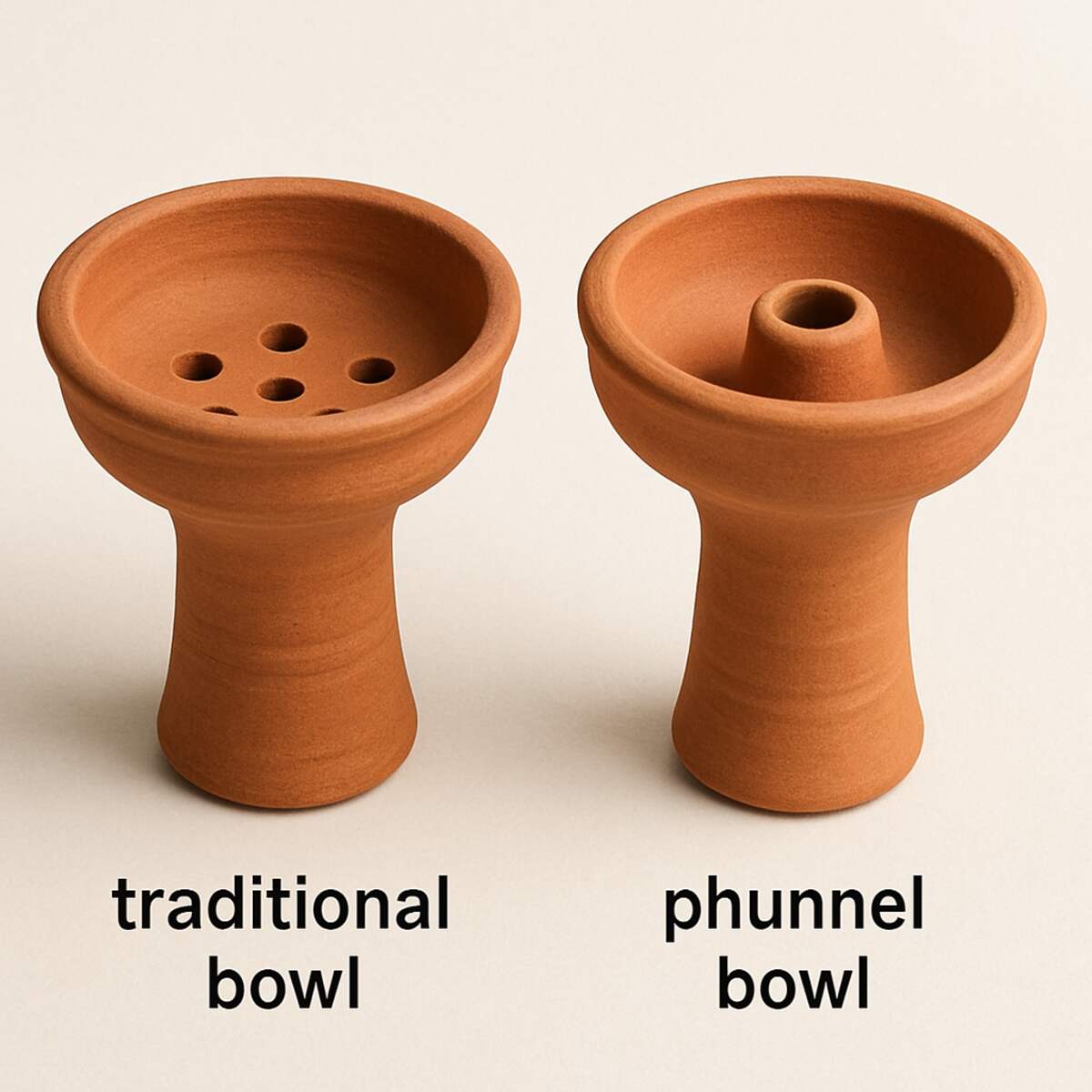
Now that your tobacco is ready, let’s talk about the hardware. That standard “Egyptian” bowl that likely came with your hookah—the one with several small holes at the bottom—is great for drier tobaccos. With a juicy, molasses-heavy brand like Tangiers, however, it’s a recipe for a sticky mess and wasted flavor. As the tobacco heats up, those precious, flavor-packed juices will drip straight through the holes and down your stem, leaving you with a dry, harsh smoke. You’re literally watching your flavor go down the drain.
To prevent this, you need a different style of bowl called a Phunnel Bowl. The design difference is simple but brilliant: instead of multiple holes at the bottom, a phunnel has a single, raised hole in the center that looks like a tiny volcano. This central column is called the spire. This design is a complete game-changer, making a phunnel bowl for dark leaf shisha like Tangiers an essential piece of equipment rather than a simple upgrade.
That raised spire acts like a moat, keeping all the molasses and flavor locked inside the bowl as it cooks. Nothing drips down, ensuring every puff is as rich and consistent as the first. Using a phunnel isn’t just a recommendation; it’s a non-negotiable part of the process. Now that you have the right gear, it’s time to learn the unique packing technique this tobacco demands. Knowing how to properly pack Tangiers is the final key to unlocking that perfect session.
How to Properly Pack Tangiers: Mastering the All-Important Dense Pack
For most tobaccos you’ve smoked, the goal is a “fluff pack”—sprinkling the shisha into the bowl to leave plenty of air for heat to pass through. With Tangiers, you must do the exact opposite. This is where most new Tangiers smokers go wrong, resulting in a harsh, burnt taste. Because Tangiers is so rich and heat-sensitive, a fluffy pack creates hot spots that scorch the top layer of tobacco before the rest has even had a chance to cook. You need to abandon the salad-tossing mindset and learn the Tangiers dense packing method.
Think of this process less like filling a bowl and more like packing brown sugar into a measuring cup. The goal is to create a solid, uniform puck of tobacco that conducts heat slowly and evenly from the top down. This allows the shisha to bake rather than burn, unlocking the complex, underlying flavors and ensuring a smooth, long-lasting session. A dense pack in your phunnel bowl for dark leaf shisha is the foundation upon which a great Tangiers experience is built.
To achieve this, begin by sprinkling your acclimated Tangiers into the bowl until it’s slightly overfilled. Then, using a fork or your thumb, gently but firmly press the tobacco down. Don’t crush it with all your might; apply just enough pressure so that it becomes a solid, cohesive mass. The final level should sit just below the rim of the bowl—about the thickness of a dime. Most importantly, ensure the central spire of your phunnel bowl is completely clear of any stray tobacco leaves to maintain proper airflow.
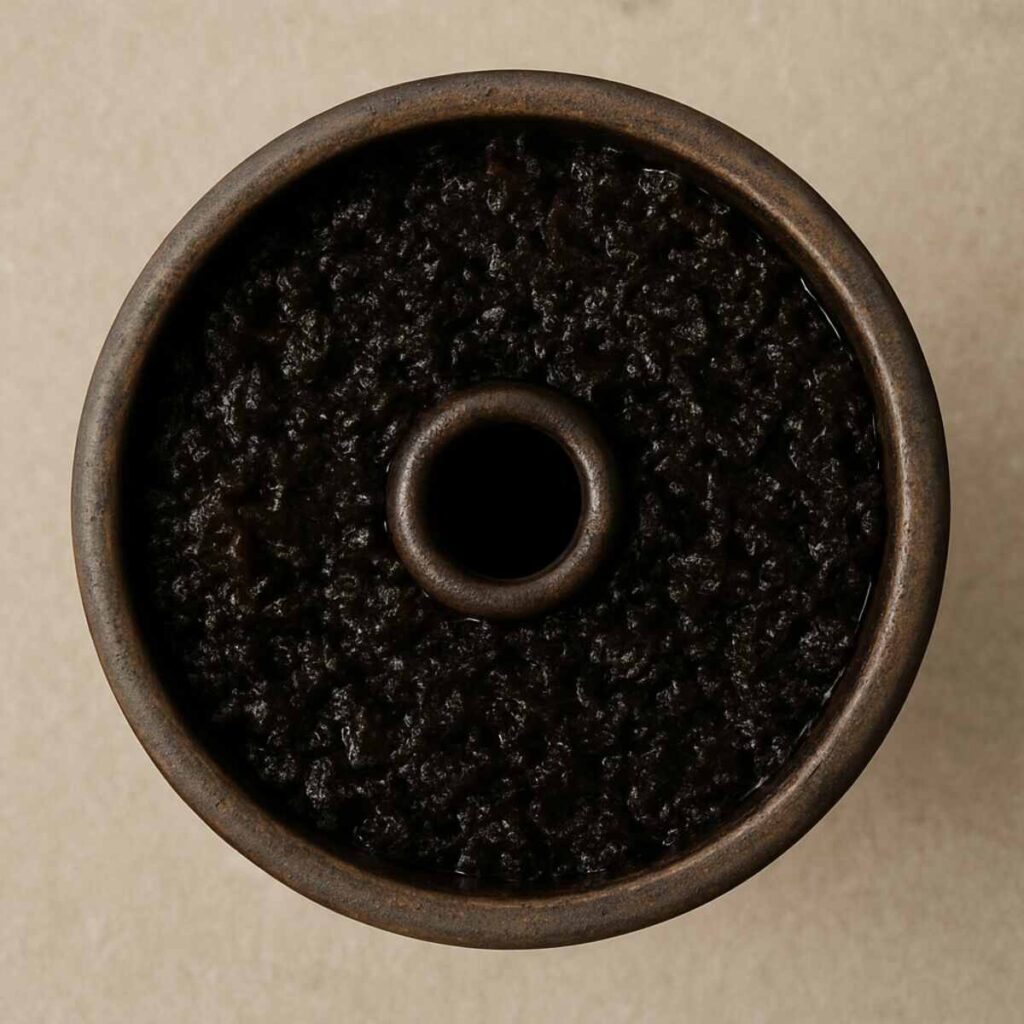
Your final pack should look smooth and even, with no loose strands sticking up. This carefully prepared bowl now acts as a perfect heating element, ready for the final step. However, even the most perfect pack can be ruined by improper heat. Learning how to properly pack Tangiers is only half the battle; now it’s time to master the gentle heat that brings it all to life.
The Art of Low & Slow: Tangiers Heat Management Tips
You’ve acclimated the tobacco and perfected the dense pack. Now comes the most delicate part of the ritual: heat management. With the common tobaccos you’re used to, the goal is often to apply a lot of heat quickly to get big clouds. Applying that same logic here is the single fastest way to ruin a bowl of Tangiers, resulting in a harsh, flavorless smoke. For Tangiers, the mantra is “low and slow.” Think of it less like lighting a bonfire and more like coaxing a delicate pastry to bake perfectly in the oven. The goal is to gently heat the entire puck of tobacco, not scorch the top layer.
To start your session and avoid common mistakes, follow this simple recipe. This is one of the most crucial Tangiers heat management tips you can learn.
- Start with less. Begin with two standard-sized natural coals, not three. If you use larger cube-style coals, two is almost always enough.
- Place them at the edge. Position the coals on the absolute outer rim of the bowl. Never place them in the center, as this will instantly burn the tobacco.
- Be patient. After placing your coals, wait a full 5-7 minutes before taking your first puff. This gives the bowl time to heat up evenly.
- Adjust inward, slowly. Only if your clouds and flavor are weak after 10 minutes should you consider moving the coals slightly further inward.
If you are using a Heat Management Device (HMD), the same principles apply. Start with two coals and keep the vents completely open or even leave the lid off entirely for the first few minutes. This prevents the initial heat from becoming overwhelming. The reason why your Tangiers is not smoking well is often a simple case of too much heat, too soon. A little patience at the beginning pays off with a much longer, more flavorful session.
You’ll know you’ve nailed it when the smoke is smooth and the flavor is rich and clear. If you ever experience a sharp, scratchy feeling in your throat, that’s your signal for too much heat. This is how you go about fixing a harsh Tangiers bowl: immediately remove a coal or push the existing ones back to the very edge. By managing your heat with a gentle hand, you unlock the true potential of the tobacco.
Mid-Session SOS: How to Fix a Failing Tangiers Bowl
Even with a perfect start, a session can sometimes drift off course. Don’t panic if the flavor fades or a sudden harshness appears; this is a normal part of the learning curve. Unlike more forgiving brands that you can set and forget, Tangiers rewards active management. Learning to read the signs and make small adjustments is the final skill that separates a good session from a truly great one.
Think of this as your quick-reference first-aid guide. If your bowl starts to fail, find your symptom below and apply the fix immediately.
- Problem: It’s harsh, scratchy, and tastes burnt.
- The Fix: This is the classic sign of too much heat. The solution for fixing a harsh Tangiers bowl is to immediately remove one coal. If you’re only using two, move them both back to the absolute outer edge of the bowl. Wait a few minutes for it to cool before puffing again.
- Problem: The clouds are weak and the flavor is muted or non-existent.
- The Fix: This is likely why your Tangiers is not smoking well—it’s not getting enough heat. If you started with two coals, try moving them slightly further in from the edge. If that doesn’t work after five minutes, add a third coal to the edge.
- Problem: The flavor was great, but now it has suddenly died.
- The Fix: Your session is likely finished. A well-packed bowl of Tangiers has a very clear endpoint where the flavor simply stops, rather than slowly turning bad. Congratulations, you’ve smoked it to completion.
Mastering these simple corrections will give you the confidence to steer any session back on track. These are the core Tangiers heat management tips in action. Now that you have the knowledge to troubleshoot any issues, you’re ready for the reward.
Your First Perfect Bowl: 3 Legendary Tangiers Flavors to Try Now
With the knowledge to pack, manage, and troubleshoot your bowl, the real fun begins. The final step in guaranteeing a great session is picking the right flavor. While Tangiers offers a massive library, starting with a proven classic removes any doubt, allowing you to focus on your technique. Choosing your first Tangiers flavor wisely ensures your hard work is rewarded with an exceptional smoke.
Arguably the most famous shisha flavor in the world, Cane Mint is the ultimate benchmark. Don’t expect a simple, light mint; the Tangiers Cane Mint flavor profile is an intense, candy-cane-sweet peppermint with a powerful and satisfying cooling effect. It’s a perfect diagnostic flavor—when you taste that bold, clean peppermint and feel the signature chill, you know you’ve nailed the process from start to finish. It’s a rite of passage for a reason.
If intense mint isn’t your style, Orange Soda is another Hall of Fame flavor that showcases what makes Tangiers special. This isn’t just a generic “orange.” It’s the uncannily accurate taste of a fizzy, sweet orange soft drink, hitting the perfect balance between citrus tang and syrupy sweetness. It’s incredibly approachable and forgiving, making it an ideal choice that consistently delivers a smooth, flavorful session that lasts for hours.
For a taste of Tangiers’ more complex side, Horchata is an excellent third choice. This flavor perfectly captures the essence of the creamy, cinnamon-spiced rice milk drink. It’s smooth, sweet, and comforting, demonstrating the brand’s ability to create nuanced and layered dessert profiles. These three represent some of the best Tangiers shisha flavors to begin with, but they are only the first chapter in a vast and rewarding flavor library.
You’ve Mastered the Ritual: What’s Next on Your Tangiers Journey
Before, Tangiers was an intimidating legend. Now, you hold the keys. You’ve moved beyond wondering why a session might taste off and have learned the ritual that unlocks its world-class flavor. While others may remain frustrated, you now understand the simple mantra for success: Acclimate, Dense Pack, and Low Heat. This is the foundation for every perfect bowl you’ll make from here on out.
Mastering how to properly pack Tangiers is more than just a new technique; it’s a milestone in your hookah journey. You’ve developed a patience and touch that many smokers never attempt. This understanding of density and heat control elevates your hobby and will help you get the most out of any premium dark leaf shisha.
Your journey with Tangiers hookah tobacco is just beginning. Go forward and confidently prepare that first bowl of Noir or Birquq. Soon, you’ll be exploring its hundreds of flavors, and when you’re truly ready for the next level, the powerful Burley line will be waiting. The world of deep, complex, and rewarding smoke is officially open to you.