


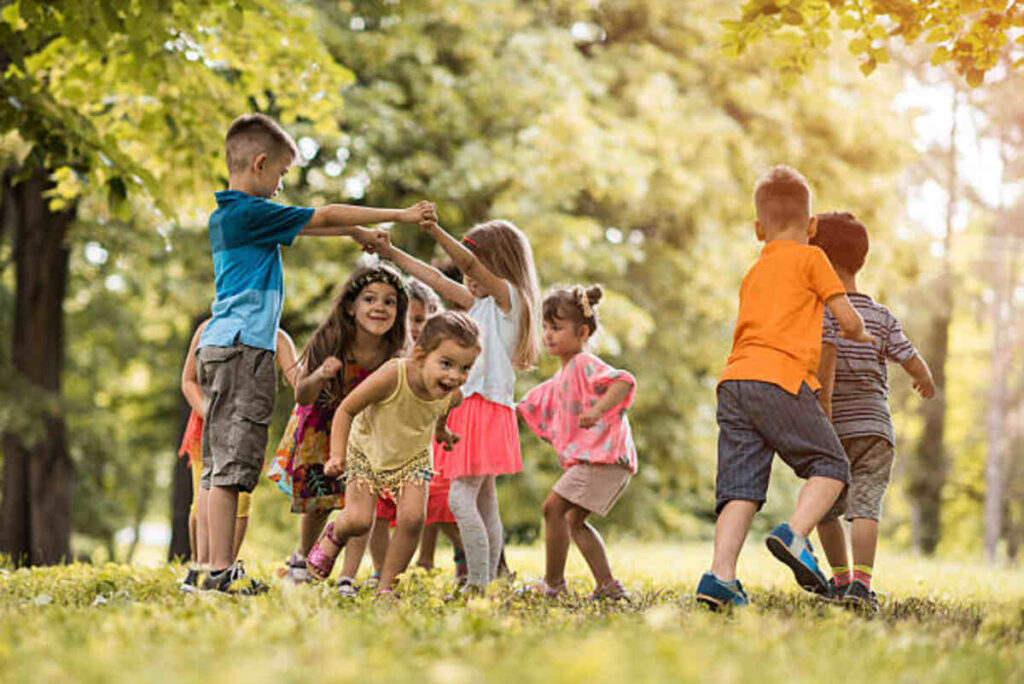
Outdoor games are one of the simplest tools adults have for supporting children’s growth. They do not require a perfect backyard, expensive gear, or a packed sports schedule. A sidewalk chalk maze, a game of tag, a schoolyard relay, a scavenger hunt, or ten minutes of jump rope can all become meaningful movement. The actual Interesting Info about Gsc108.
For U.S. parents and educators, the question is not just, “How do we get kids outside?” It is, “How do we make outdoor play safe, regular, inclusive, and enjoyable enough that children actually want to keep doing it?” That is where the real importance of outdoor games begins: they turn physical activity into something social, creative, and memorable.
Current CDC guidance says children ages 3 to 5 should be physically active throughout the day, while children and adolescents ages 6 to 17 need 60 minutes or more of moderate-to-vigorous physical activity daily. Outdoor games can help children reach that goal because they naturally combine aerobic movement, muscle use, balance, coordination, and bursts of higher-intensity play.
Quick answer: why outdoor games matter
Outdoor games help children build stronger bodies, sharper thinking skills, better social habits, and more confidence. The benefits are not limited to organized sports. Free play, playground games, family walks with challenges, recess activities, and neighborhood games all count when they get children moving in safe, age-appropriate ways.
In practical terms, outdoor games can help children:
- Move more during the day without feeling like exercise is a chore
- Practice running, jumping, climbing, throwing, catching, balancing, and changing direction
- Strengthen muscles and bones through active play
- Improve attention, memory, and classroom readiness
- Learn teamwork, patience, turn-taking, and conflict resolution
- Build resilience by trying, failing, adjusting, and trying again
- Spend time away from screens in a positive, not punitive, way
- Experience joy, independence, and a sense of belonging
The CDC identifies physical activity benefits for children that include improved attention and memory, stronger muscles and bones, better aerobic fitness, healthier weight measures, and lower risk factors for several chronic conditions. School-based physical activity, recess, and active play can all support these outcomes.
What counts as an outdoor game?
An outdoor game is any playful activity that gets children moving outside. It can be structured, like soccer practice, or unstructured, like inventing a chase game at recess. It can happen at school, in a park, on a driveway, in a backyard, on a playground, or in a community recreation space.
Common examples include:
- Tag, freeze tag, tunnel tag, and shadow tag
- Hide-and-seek, sardines, and capture the flag
- Hopscotch, four square, jump rope, and hula hoop games
- Soccer, basketball, baseball, softball, tennis, flag football, and lacrosse
- Relay races, obstacle courses, and scooter races
- Playground climbing, swinging, sliding, and balancing
- Nature scavenger hunts, leaf sorting, bug observation, and trail games
- Sidewalk chalk challenges, beanbag toss, and ring toss
- Water games, sprinklers, and supervised pool games where appropriate
- Snow games, sledding, snow fort building, and winter scavenger hunts
The key is movement with purpose. Children are more likely to stay engaged when an activity feels like play rather than a performance test. A child who resists “exercise” may happily sprint during tag, squat during a garden treasure hunt, or climb during a playground adventure.
This is why kids outdoor activities are so useful for families and schools: they can be adapted to different ages, skill levels, spaces, budgets, and climates.
The deeper importance of outdoor games
The phrase “outdoor play” can sound light, as if it is a bonus after the serious work is done. But for children, play is serious learning dressed in sneakers.
The American Academy of Pediatrics has emphasized that play supports healthy development, including problem-solving, collaboration, creativity, executive functioning, language, social development, peer relationships, physical development, and a child’s sense of agency. In other words, games are not a break from growth. They are one of the ways growth happens.
The importance of outdoor games is especially clear when adults look beyond the obvious physical benefits. Yes, children burn energy. But they also learn how to read social cues, negotiate rules, recover from disappointment, estimate risk, manage excitement, and make decisions in real time.
Consider a simple game of capture the flag. Children must plan, communicate, sprint, defend, adapt, observe boundaries, and handle winning or losing. That is physical education, social learning, emotional practice, and strategy all woven into one game.
Physical benefits: building strong, capable bodies
Children’s bodies are designed to move in many directions. Outdoor games invite that variety. Running across grass, hopping over chalk lines, climbing playground equipment, kicking a ball, balancing on a curb, or throwing a Frisbee all challenge the body in slightly different ways.
Physical activity for children should include aerobic, muscle-strengthening, and bone-strengthening activities. The CDC notes that many child-friendly activities naturally combine these categories; for example, running and jumping can strengthen bones, while climbing can strengthen muscles.
Outdoor games can support:
- Cardiovascular fitness: Games like tag, soccer, basketball, and relay races get the heart beating faster.
- Muscle development: Climbing, crawling, tug games, monkey bars, and obstacle courses use the arms, legs, core, and grip.
- Bone strength: Jumping, hopping, running, and skipping are weight-bearing activities that challenge growing bones.
- Coordination: Throwing, catching, kicking, dodging, and balancing help children connect vision, timing, and body control.
- Agility: Chase games and sports encourage quick stops, turns, and changes in direction.
- Endurance: Longer games help children learn how to pace themselves.
Parents sometimes worry that physical activity must be highly organized to “count.” It does not. A backyard obstacle course made from cones, buckets, pool noodles, and chalk can be just as valuable as a formal drill for getting children moving safely and enthusiastically.
Brain benefits: movement supports learning
A child’s brain is not separate from the body. Movement helps children wake up their attention systems, practice planning, and return to seated work with more readiness. This matters at home during homework time and at school during the long stretches of a typical academic day.
The CDC lists improved attention, memory, and academic performance among the benefits of physical activity for children. It also notes that recess benefits students’ mental, emotional, and physical well-being and that recess strategies aim to support physical activity participation and academic outcomes such as performance, behavior, and attention.
Outdoor games can strengthen executive function because children must:
- Remember rules
- Inhibit impulses
- Switch strategies
- Track time and space
- Work toward a goal
- Manage frustration
- Pay attention to other players
Think of red light, green light. The game looks simple, but the child is practicing listening, impulse control, body awareness, and self-regulation. Simon Says does something similar. So do sports, relay games, and playground challenges that require children to wait, observe, respond, and adjust.
For educators, this is a powerful classroom management insight. Short outdoor games before challenging lessons, after lunch, or during transition-heavy parts of the day can help children reset. The goal is not to replace academics. The goal is to prepare the brain to receive them.
Social benefits: learning how to be part of a group
Outdoor games are little communities with moving rules. Children learn who goes first, what counts as fair, how to include someone new, what to do when a rule is broken, and how to handle disappointment without quitting every time.
These lessons matter because social skills are not learned only through lectures. They are rehearsed through lived experience. A child who argues over a boundary line in kickball is practicing negotiation. A child who comforts a friend after a missed shot is practicing empathy. A child who changes the rules so a younger sibling can play is practicing inclusion.
Outdoor games can help children practice:
- Taking turns
- Sharing equipment
- Communicating clearly
- Reading facial expressions and body language
- Solving disagreements
- Respecting boundaries
- Encouraging teammates
- Handling competition in healthy ways
- Celebrating others’ success
The benefits of sports often receive attention because team sports clearly build cooperation, responsibility, discipline, and leadership. Federal youth sports resources have highlighted associations between sports participation and improved teamwork, social skills, life skills, self-control, and leadership qualities.
Still, children do not need to be on a competitive team to gain social benefits. A rotating recess game, a neighborhood scavenger hunt, or a family relay can teach the same human basics: listen, cooperate, adapt, try again.
Emotional benefits: confidence, resilience, and stress relief
Children need safe opportunities to test themselves. Outdoor games create those opportunities in a natural way. A child tries to climb higher, run faster, throw farther, balance longer, or stay in the game after losing a round. Each effort becomes a small deposit of confidence.
Outdoor play also gives children a healthy outlet for big feelings. Excitement, frustration, nervousness, and pride all appear during games. With adult support, children learn that emotions can be felt and managed without ruining the activity.
Physical activity is associated with mental and emotional benefits for youth, and CDC materials note that time outdoors may promote mental health and stress reduction. Youth sports resources also connect sports participation with lower stress, higher self-esteem and confidence, and improved psychological and emotional well-being, including for individuals with disabilities.
Outdoor games can support emotional growth by giving children chances to:
- Try something hard in a low-stakes setting
- Experience manageable risk
- Learn that mistakes are part of play
- Recover after losing
- Ask for help
- Encourage others
- Notice progress over time
- Feel proud of effort, not only winning
The adult’s role is important here. If adults turn every game into a performance review, play loses some of its emotional power. A better approach is to notice effort, strategy, kindness, and persistence.
Try saying:
- “I noticed you kept trying even after that was hard.”
- “You changed your plan, and it worked better.”
- “That was kind of you to explain the rules.”
- “You looked disappointed, and you still finished the game.”
This kind of feedback helps children connect outdoor play with inner strength.
Creativity and problem-solving: the outdoor world as a classroom
Outdoor spaces are full of loose parts: sticks, leaves, stones, chalk lines, shadows, puddles, cones, balls, and open space. Children use these materials to invent games and stories.
That creativity matters. A child designing a backyard obstacle course is thinking like an engineer. A group inventing a new version of tag is thinking like a rules committee. A class creating a nature scavenger hunt is practicing observation, categorization, language, and collaboration.
Outdoor games encourage children to solve practical problems:
- How can we make teams fair?
- What should happen if the ball goes out of bounds?
- How can a younger child join safely?
- How do we change the game if there is less space?
- What can we do when the ground is wet?
- How do we keep playing when we only have one ball?
These questions are small, but they build flexible thinking. Children learn that a problem is not always a stop sign. Sometimes it is an invitation to redesign the game.
For educators, this is where outdoor play connects beautifully with project-based learning. Students can map a playground, create movement stations, design a class field day, or write instructions for a game they invented. The learning becomes active, memorable, and student-owned.
Organized sports vs. free play: children benefit from both
Many adults ask whether organized sports are better than free outdoor play. The answer is not either-or. Children benefit from both, but in different ways.
Organized sports can provide coaching, skill development, teamwork, commitment, routines, and exposure to healthy competition. The benefits of sports may include stronger fitness habits, social connection, leadership, discipline, and confidence when the environment is supportive and age-appropriate.
Free outdoor play offers something equally valuable: child-led exploration. Children decide what to play, how to change the rules, when to rest, and how to use the space. This builds independence and imagination.
A balanced week might include:
- PE class or movement-based learning at school
- Daily recess or outdoor breaks when possible
- One organized sport or recreation program if the child enjoys it
- Family movement, such as walks, bike rides, or driveway games
- Free play time with minimal adult direction
- Quiet outdoor time, such as reading under a tree or observing nature
Parents should not feel pressured to fill every afternoon with structured sports. Some children love leagues. Others thrive with hiking, skating, dance games, playground challenges, biking, or informal neighborhood play. The best activity is usually the one a child will repeat with joy.
Age-by-age outdoor game ideas
Children develop at different rates, so age ranges are guides, not rigid rules. Always adapt games for a child’s abilities, temperament, safety needs, and interests.
Toddlers and preschoolers
Young children need simple, joyful movement throughout the day. They are building balance, coordination, confidence, and language. The CDC recommends that children ages 3 to 5 be active throughout the day, with caregivers encouraging active play such as jumping or riding a tricycle.
Good kids outdoor activities for this age include:
- Follow the leader
- Animal walks, such as bear crawl, frog jump, or crab walk
- Bubble chasing
- Soft ball rolling and kicking
- Mini obstacle courses
- Chalk paths
- Color hunts
- Parachute games
- Water painting with brushes
- “Can you find?” nature searches
Keep instructions short. Use imagination. Instead of “run to the cone and back,” try “Can you deliver this pretend pizza to the red cone restaurant?”
Early elementary children
Children in kindergarten through second grade often love games with clear rules and lots of repetition. They are ready for simple competition, but they still need adult help with fairness and emotions.
Try:
- Freeze tag
- Red light, green light
- Hopscotch
- Four square with simplified rules
- Jump rope rhymes
- Scooter paths
- Beanbag toss
- Kickball with soft equipment
- Treasure hunts
- Playground circuits
At this age, success should be easy to find. Offer different ways to participate: running, walking, tossing, counting points, cheering, or helping set up.
Upper elementary children
Children in third through fifth grade are often ready for more strategy, teamwork, and self-directed play. They may enjoy modifying rules and creating challenges.
Try:
- Capture the flag
- Relay races
- Soccer variations
- Basketball shooting games
- Timed obstacle courses
- Frisbee golf with cones or buckets
- Nature bingo
- Partner jump rope
- Playground fitness challenges
- Student-designed field day stations
This age group benefits from leadership roles. Let students or siblings design a game, explain the rules, choose safety boundaries, and reflect on what worked.
Middle schoolers
Middle school students may resist anything that feels childish, but many still enjoy active play when it respects their growing independence. Offer choice, music when appropriate, social connection, and meaningful challenge.
Try:
- Ultimate Frisbee
- Volleyball
- Basketball tournaments
- Flag football
- Track-style challenges
- Fitness scavenger hunts
- Dance or step challenges
- Orienteering-style map games
- Cooperative team challenges
- Outdoor leadership games
For this age, avoid forced public embarrassment. Give options. Some students prefer competitive games, while others prefer walking clubs, biking, hiking, yoga outdoors, or skill-based stations.
High school students
Teens still need movement, even if recess has disappeared from their school day. The CDC recommends that children and adolescents ages 6 to 17 get at least 60 minutes of physical activity daily, and schools can support this through PE, recess or activity policies, clubs, intramurals, interscholastic sports, and before- or after-school programs.
Good options include:
- Intramural sports
- Walking or running clubs
- Outdoor strength circuits
- Tennis or pickleball
- Soccer, basketball, or volleyball
- Hiking groups
- Student-led field days
- Outdoor service projects that involve movement
- Peer coaching programs
- Recreation nights at school or community centers
Teens appreciate autonomy. Invite them to help choose activities, plan events, or mentor younger students.
Practical tips for parents
The best outdoor routine is the one your family can actually keep. You do not need a dramatic lifestyle overhaul. Start small, repeat often, and make it easier to say yes.
1. Build outdoor play into existing routines
Attach movement to something that already happens:
- Ten minutes of driveway basketball before dinner
- A walk after school before homework
- Playground time after grocery pickup
- Weekend park time after breakfast
- A family game while laundry runs
- A scooter ride before bath time
When outdoor play has a predictable place in the day, it becomes less of a negotiation.
2. Keep simple equipment ready
A small “go play” bin can remove friction. Include items such as:
- Sidewalk chalk
- Jump ropes
- Cones
- Soft balls
- Bubbles
- Beanbags
- Hula hoops
- A Frisbee
- A magnifying glass
- Reusable water bottles
You do not need all of these. One ball and a few cones can create dozens of kids outdoor activities.
3. Offer choices, not lectures
Instead of saying, “You need exercise,” try:
- “Do you want to play chalk maze or soccer shots?”
- “Should we walk to the park or ride scooters?”
- “Do you want a timer challenge or a scavenger hunt?”
- “Should we play tag for five minutes or shoot baskets for ten?”
Choice gives children a sense of ownership.
4. Join sometimes, step back sometimes
Children benefit when adults play with them. They also benefit when adults allow safe independence. A healthy rhythm might be: start the game together, model the rules, then step back and let children take over.
The AAP has emphasized the value of child-driven play and unstructured time, while also recognizing the role adults play in creating safe, nurturing environments for play.
5. Use screens as a bridge, not only a battle
Screens are part of modern family life. Instead of making outdoor play feel like punishment, connect it to what children already like.
For example:
- A child who loves building games might design a real-world obstacle course.
- A child who likes superheroes might create rescue missions outside.
- A child who likes photography might go on a nature photo hunt.
- A child who likes video game levels might draw chalk “levels” on the sidewalk.
The goal is not to shame digital interests. The goal is to widen the child’s menu of enjoyable activities.
Practical tips for educators and schools
Schools play a major role in children’s activity levels because children spend so much of their week there. Outdoor games can support academic readiness, school climate, and student well-being when they are planned intentionally.
CDC school guidance describes comprehensive physical activity programs as a combination of strategies before, during, and after school, including physical education, recess, classroom physical activity, staff involvement, and family and community engagement.
1. Protect recess as learning time
Recess is not wasted time. It is a movement, social, and emotional reset. When students return from active outdoor play, many are better prepared to listen, focus, and participate.
Recess encourages students to be physically active with peers and benefits mental, emotional, and physical well-being. CDC and SHAPE America recess resources focus on increasing physical activity participation and improving academic achievement areas such as behavior and attention.
2. Offer structured and unstructured options
Some children jump into games immediately. Others need a doorway. Schools can support both by offering:
- Open play areas
- Walking paths
- Ball zones
- Chalk games
- Jump rope stations
- Quiet nature observation areas
- Staff-led game starters
- Student leadership roles
A child who does not want to play kickball might enjoy a walking club or chalk challenge. Inclusion starts with options.
3. Teach games before expecting independence
Many recess conflicts happen because students do not know the same rules. Teach common games during PE or morning meetings. Practice choosing teams, taking turns, resolving disputes, and inviting others in.
Useful sentence frames include:
- “Can I join next round?”
- “Let’s vote on the rule.”
- “Rock-paper-scissors for who goes first?”
- “Do you want to be on my team?”
- “Let’s restart from the last fair point.”
These small scripts can prevent big conflicts.
4. Use painted play spaces and low-cost markings
Schools do not always need new playground structures to increase outdoor play. Painted lines, shapes, numbers, maps, and game boards can transform blacktop into movement zones.
CDC notes that painted play spaces use colorful paint and stencils to create recess games on existing hardscapes, offering a practical way to enhance school play environments.
5. Connect outdoor games with curriculum
Outdoor games can reinforce classroom learning:
- Math: skip-count hopscotch, measurement relays, graphing class activity choices
- Literacy: vocabulary scavenger hunts, story walks, action verbs charades
- Science: shadow tracking, weather observations, plant hunts
- Social studies: map games, community helper relays, cooperative problem-solving
- Art: chalk murals, nature patterns, movement-inspired drawing
This approach helps educators protect movement without feeling they are losing instructional time.
Making outdoor games inclusive
Outdoor games should not belong only to the fastest, strongest, or most athletic children. A well-designed play culture gives every child a way to participate meaningfully.
The CDC states that physical activity is important for all children and advises families of children with disabilities to talk with a doctor or other experienced professional about appropriate types and amounts of activity.
Ways to make games more inclusive include:
- Offer walking and running versions of the same game.
- Use larger, softer, or brightly colored balls.
- Shorten distances.
- Allow partner participation.
- Create roles such as scorekeeper, caller, designer, referee, or coach.
- Use visual cues along with verbal directions.
- Give children extra processing time before starting.
- Avoid elimination games where children sit out for long periods.
- Rotate teams frequently.
- Ask children what adaptation would help them participate.
Inclusion is not about lowering the value of play. It is about widening the doorway so more children can enter.
Safety without stealing the joy
Outdoor games should include reasonable risk, not reckless danger. Children need to climb, balance, run, and explore, but adults should reduce preventable hazards.
The U.S. Consumer Product Safety Commission recommends checking playground surfacing, equipment condition, sharp edges, tripping hazards, spacing, guardrails, and supervision. Its public playground checklist also highlights protective surfacing around equipment and the need for regular inspection.
A practical outdoor safety checklist
Before play, adults can quickly check:
- Is the play area free of broken glass, sharp objects, or obvious hazards?
- Is equipment age-appropriate and in good condition?
- Is the surface under climbing equipment safer for falls?
- Are children wearing shoes and clothing that fit the activity?
- Is there enough space between running games and climbing areas?
- Is the weather safe for the planned activity?
- Is water available?
- Do children understand the boundaries?
- Is supervision active but not overbearing?
For bikes, scooters, skates, skateboards, and similar activities, protective gear matters. The CDC encourages caregivers to provide helmets, wrist pads, or knee pads for activities where they are appropriate and to ensure activities match the child’s age.
Sun, heat, and hydration
Outdoor play is healthy, but children still need protection from sun and heat. The CDC advises shade, protective clothing, sunglasses, wide-brimmed hats, and sunscreen for children older than 6 months with parental permission; it also recommends water breaks and planning around hot parts of the day when needed.
Practical steps include:
- Keep water visible and easy to access.
- Build in shade breaks.
- Use sunscreen according to the label and school or family policy.
- Watch for signs of overheating.
- Choose morning or late afternoon play during hot weather.
- Modify intensity when air quality, heat, or humidity is a concern.
- Have indoor movement alternatives ready when outdoor conditions are unsafe.
Cold, rain, and winter weather
Weather does not have to end outdoor play, but it should shape the plan. In colder climates, children may still enjoy outdoor games with proper clothing and shorter sessions. In rainy conditions, schools and families can use covered areas, puddle-safe nature walks, or indoor movement games if surfaces are slippery.
Good cold-weather options include:
- Snow target toss
- Animal track hunts
- Winter scavenger hunts
- Short walking challenges
- Snow maze building
- Follow-the-leader paths
- Balance games on safe, dry surfaces
The guiding rule is simple: adjust the activity to the conditions, not the child’s need to move.
Budget-friendly outdoor game ideas
Outdoor play does not need to be expensive. Many of the best games use everyday materials.
Try these low-cost options:
- Chalk obstacle course: Draw arrows, circles, balance lines, hop zones, and spin spots.
- Sock ball toss: Roll clean socks into balls and toss them into buckets.
- Nature scavenger hunt: Search for colors, textures, shapes, or sounds.
- Backyard bowling: Use empty plastic bottles and a soft ball.
- Cone-free relays: Use shoes, sticks, or chalk marks as start and finish lines.
- Shadow tag: Step on another player’s shadow instead of tagging bodies.
- Story walk: Place pages or prompts around a yard or school space.
- Rock alphabet: Find stones and arrange them into letters or words.
- Leaf relay: Move leaves with spoons, tongs, or teamwork.
- DIY ring toss: Use paper plates with centers cut out and a safe post or cone.
These kids’ outdoor activities are flexible. They work for families, classrooms, after-school programs, homeschool groups, and community events.
How to motivate children who “don’t like sports”
Not every child enjoys competitive sports. That is normal. The mistake adults make is assuming that a child who dislikes sports dislikes movement. Often, the child dislikes pressure, comparison, confusing rules, uncomfortable uniforms, or fear of letting a team down.
The CDC encourages families to make physical activity fun, choose activities children enjoy, be positive, and include both structured and unstructured options such as walking, running, skating, bicycling, swimming, playground activities, and free-time play.
Try these approaches:
Start with personality, not the activity
Ask:
- Does my child like imagination?
- Do they prefer solo or group activities?
- Do they enjoy competition or avoid it?
- Do they like music?
- Do they like nature?
- Do they prefer wheels, water, climbing, throwing, or exploring?
Then match the activity. A child who dislikes soccer might love hiking. A child who avoids team games might enjoy jump rope. A child who resists running might love scooter challenges.
Reduce the audience
Some children are more willing to try when fewer people are watching. Start in the backyard, driveway, empty court, or quiet park before joining a group.
Praise effort specifically
Avoid vague praise like “You’re amazing” or pressure-filled praise like “You’re the best.” Try:
- “You practiced that throw five times.”
- “You found a new way around the obstacle.”
- “You kept your body under control.”
- “You were brave enough to try.”
Make it social
Invite a friend, sibling, cousin, or neighbor. Many children move more when the activity is connected to relationship.
Keep the first goal tiny
Try five minutes. Try one lap. Try one game. Success builds momentum.
Outdoor games at home: sample routines
The easiest routine is one that fits your family’s real life. Here are flexible examples.
The 10-minute after-school reset
- Two minutes: snack and water
- Three minutes: child chooses a movement game
- Three minutes: adult joins or supervises
- Two minutes: cool-down walk and transition to homework
Good games: tag, jump rope, chalk maze, basketball shots, scooter loop, or nature hunt.
The weekend park plan
- Start with free play.
- Add one family game, such as kickball or Frisbee.
- Take a water break.
- Let the child choose the final activity.
- End with a calm walk or stretch.
This gives structure without overplanning.
The no-yard plan
Families without yards can still make outdoor games work. Try:
- Local parks
- School playgrounds open after hours where permitted
- Apartment courtyards
- Sidewalk chalk games
- Walking games around the block
- Community recreation centers
- Public basketball or tennis courts
- Nature trails
- Library story walks
The importance of outdoor games is not tied to owning outdoor space. Access matters, and communities can support families by maintaining safe parks, sidewalks, schoolyards, and recreation programs.
Outdoor games in schools: sample ideas by setting
Small playground
Use stations:
- Jump rope corner
- Chalk target zone
- Balance line
- Beanbag toss
- Quiet nature observation area
- Walking loop
Rotate students or let them choose.
Blacktop or parking-lot play area
Use painted or chalk markings:
- Four square
- Hopscotch
- Number lines
- Agility ladders
- Map trails
- Shape jumps
- Toss targets
Grass field
Offer larger movement games:
- Capture the flag
- Soccer variations
- Relay races
- Kickball
- Frisbee
- Cooperative parachute games
- Walking clubs
Indoor backup for unsafe weather
If outdoor play is unsafe, preserve the movement habit indoors:
- Hallway walking with supervision
- Classroom movement stations
- Desk-side stretching
- Dance breaks
- Silent Simon Says
- Yoga cards
- Fitness dice
- Balance challenges
The message should be consistent: movement matters every day, even when the location changes.
Common mistakes adults make with outdoor games
Making every game competitive
Competition can be fun, but too much of it can discourage children who are still developing skills. Mix competitive games with cooperative challenges.
Try: “Can the whole class complete 100 jumps?” instead of “Who can jump the longest?”
Over-scheduling play
Children need room to invent. If every minute is coached, corrected, or evaluated, play becomes another assignment.
Withholding movement too often
Taking away recess or outdoor play may seem like a quick consequence, but it can remove the very reset some children need to improve behavior. Many schools look for alternative consequences that preserve physical activity while addressing behavior.
Ignoring children who hang back
A child standing alone at recess may need help entering play. Teach joining skills, create buddy systems, and offer non-intimidating choices.
Forgetting older children
Outdoor games are not only for little kids. Tweens and teens still need movement, sunlight with protection, fresh air, and social connection.
Assuming sports are always positive
The benefits of sports depend on the environment. A supportive coach, reasonable schedule, safe training, and respect for the child’s development make a huge difference. Overly intense or shaming sports cultures can drain the joy from movement.
How to tell if outdoor games are helping
You do not need a spreadsheet to notice progress. Look for small signs.
Children may:
- Ask to go outside more often
- Show better stamina during play
- Recover from losing more easily
- Invite others to join
- Try new movements
- Sleep more consistently
- Transition back to schoolwork more smoothly
- Show pride in effort
- Spend less time saying “I’m bored”
- Create their own games
Educators may notice:
- Better recess participation
- Fewer conflicts after games are explicitly taught
- Improved transitions after outdoor breaks
- More inclusive peer interactions
- More student leadership
- Better use of playground space
Progress may be uneven. That is normal. The goal is not perfect behavior or instant athletic skill. The goal is a healthier rhythm of movement, play, and growth.
FAQs
How much outdoor play do children need each day?
There is no single outdoor-play number that fits every child, climate, and schedule. For physical activity, CDC guidance says children ages 3 to 5 should be active throughout the day, and children ages 6 to 17 need at least 60 minutes of moderate-to-vigorous physical activity daily. Outdoor games are one practical way to help meet that need.
Do outdoor games count as exercise?
Yes. Outdoor games can count as physical activity when they get children moving. Tag, running games, biking, climbing, jumping, sports, and playground play can all support aerobic fitness, muscle strength, bone strength, coordination, and endurance, depending on the activity.
Are organized sports better than free play?
Not necessarily. Organized sports can build skills, teamwork, discipline, and confidence. Free play can build creativity, independence, problem-solving, and social negotiation. Most children benefit from a mix of both.
What are the best outdoor games for children who are not athletic?
Start with low-pressure activities: scavenger hunts, chalk obstacle courses, walking games, bubbles, Frisbee toss, playground exploration, gardening tasks, scooter rides, or cooperative challenges. Avoid making speed or winning the only measure of success.
How can schools make recess more inclusive?
Schools can offer multiple activity zones, teach game rules in advance, provide adaptive equipment, reduce elimination games, create walking options, use student leaders, and train staff to help children enter play. Inclusion improves when students have more than one way to participate.
What if the weather is too hot?
Use shade, water breaks, lighter activity, and cooler times of day. The CDC recommends protecting children from sun and heat with shade, protective clothing, sunscreen when appropriate, hydration, and planning around hot conditions.
What if we do not have a backyard?
Use public parks, sidewalks, schoolyards where permitted, community courts, recreation centers, apartment common areas, walking routes, libraries with outdoor programs, or local trails. Many kids outdoor activities need only a small safe space.
How do outdoor games help in the classroom?
Outdoor games can support attention, memory, behavior, social skills, and readiness to learn. Recess and school-based physical activity are part of a broader strategy for helping students move during the school day.
Should recess be taken away as punishment?
Many educators avoid withholding recess because movement supports student well-being and classroom readiness. If behavior needs to be addressed, schools can consider alternatives that preserve physical activity while still teaching responsibility.
How can parents compete with screens?
Do not frame outdoor play only as “less screen time.” Frame it as more fun, more freedom, and more connection. Offer choices, invite friends, connect outdoor games to your child’s interests, and start with short, enjoyable sessions.
The bottom line
Outdoor games give children more than fresh air. They give children a place to move, think, cooperate, imagine, lead, recover, and grow.
For parents, the path can be simple: keep a ball by the door, say yes to the park, draw a maze with chalk, take a walk after dinner, or join a five-minute game of tag.
For educators, the opportunity is equally practical: protect recess, teach inclusive games, use outdoor spaces creatively, and treat movement as part of learning rather than a distraction.
The importance of outdoor games lies not in producing perfect athletes. It is that they help children become more capable humans. Stronger bodies, steadier minds, kinder friendships, braver attempts, and happier memories often begin with a simple invitation:
“Let’s go outside and play.”